
Water damage can happen suddenly. A broken pipe, overflowing toilet, leaking AC unit, roof leak, heavy rain, hurricane, or sewage backup can leave a Miami home or business with standing water in a very short time.
The most important thing is not to wait and see what happens. Water can move into flooring, drywall, ceilings, cabinets, and other hidden areas. In Miami, flooding can also happen quickly during heavy rain and storms, and Miami-Dade County identifies flooding as one of the area's persistent hazards.
This guide explains what to do after water damage in Miami, what you should avoid, when professional water extraction is needed, and how to reduce the risk of structural damage and mold.
What Should You Do Immediately After Water Damage?
Your first priority should always be safety. Do not start cleaning until you know the area is safe.
Follow these steps:
- Protect people and pets from the affected area.
- Stay away from standing water if there may be an electrical hazard.
- Stop the source of the water if you can do it safely.
- Contact the appropriate utility or emergency service when necessary.
- Remove valuable belongings only when it is safe.
- Document the damage with photos and videos.
- Start water removal and drying as soon as possible.
- Watch for signs of hidden moisture and mold.
Miami-Dade County specifically advises residents not to walk or drive through standing water because it can hide hazards, and warns people not to touch electrical equipment when it is wet or when they are standing in water.
1. Make Sure Everyone Is Safe
Before worrying about floors, walls, furniture, or belongings, make sure everyone is safe. Water and electricity can be a dangerous combination.
If water has reached electrical outlets, appliances, wiring, or electrical panels, do not touch them while standing in water. Miami-Dade County recommends addressing electrical hazards before beginning cleanup.
Also stay away from floodwater when you do not know where it came from. Floodwater may contain dirt, sewage, chemicals, bacteria, or other contaminants. After a major storm, do not enter your property until local authorities say it is safe to return.
Leave the property and get professional help when:
- You see sparks or damaged electrical wiring.
- There is a strong gas smell.
- The ceiling is badly sagging.
- The structure appears unstable.
- Sewage has entered the property.
- Floodwater is contaminated.
- You cannot safely reach the water source.
Your safety is more important than saving a carpet, couch, or piece of drywall.
2. Stop the Source of the Water
The next step is to stop more water from entering the property. The correct action depends on the cause.
If you have a burst pipe
Turn off the home's main water supply if you can do so safely. If you suspect an internal pipe burst, learn more about our burst pipe water damage repair.
If an appliance is leaking
Stop using the appliance and shut off its water supply.
If the water is coming from the ceiling
The source could be a plumbing leak, AC problem, roof leak, or another issue above the ceiling. Avoid assuming you know the cause until it has been inspected. Read our detailed guide on ceiling water damage repair.
If the damage is caused by storm or floodwater
Do not put yourself in danger trying to stop outside water from entering. Refer to our flood damage restoration services.
Miami-Dade County advises residents with broken or leaking pipes to contact the county Water and Sewer Department, while flooding affecting the interior after a storm can be reported through 311.
Stopping the source is important because removing existing water without fixing the source can simply lead to more damage.
3. Stay Away From Contaminated Water
Not all water damage is the same. Clean water from a supply line may be handled differently from water that has come through a sewer backup or flood.
Sewage water can contain harmful contaminants, so you should be especially careful around it. If sewage has backed up into your home, avoid direct contact and consider professional sewage backup cleanup.
Miami-Dade County recommends protective equipment for sewage cleanup and notes that contaminated materials such as some drywall, rugs, wall coverings, and other absorbent materials may need to be discarded rather than simply cleaned.
The same caution applies to some floodwater. You may not be able to tell by looking at the water whether it is contaminated.
4. Take Photos and Videos Before Cleanup
Once it is safe, document the damage. Take clear photos and videos of:
- Standing water
- Wet floors
- Damaged ceilings
- Wet drywall
- Damaged furniture
- Appliances
- Cabinets
- Flooring
- Water stains
- Visible mold
- Damaged personal belongings
Take wide photos of the room and close-up photos of individual damaged items. This documentation can be useful when communicating with your insurance company, landlord, property manager, or restoration contractor.
Miami-Dade County also recommends photographing flood damage for insurance purposes. Do not delay necessary emergency work simply because you are taking pictures. Document the damage as quickly as reasonably possible while keeping safety first.
5. Remove Standing Water as Quickly as Possible
Standing water should not be left sitting in your home. The longer water remains, the more opportunity it has to move into porous materials such as drywall, wood, insulation, carpet, and subflooring.
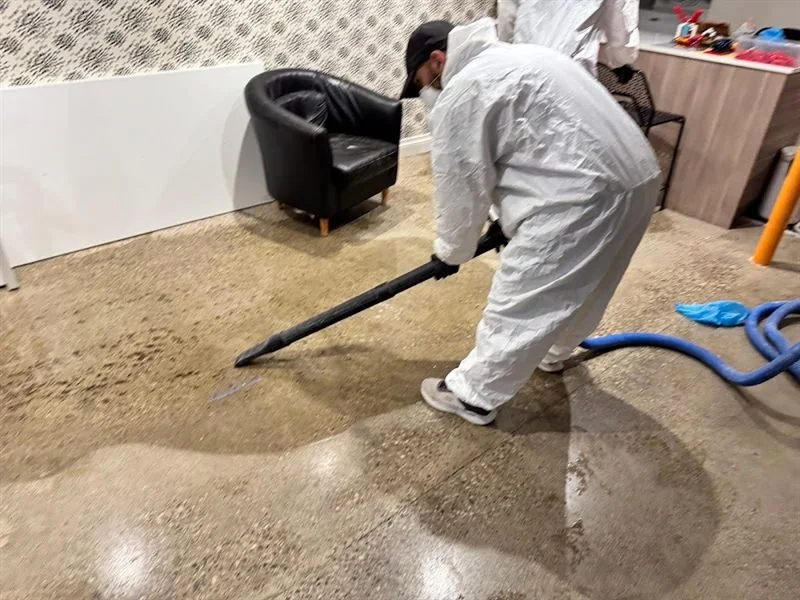
For a small amount of clean water, a homeowner may sometimes be able to remove it safely. But larger water losses can quickly become difficult to manage with household equipment. Professional emergency water extraction uses commercial equipment designed to remove large amounts of water from floors, carpets, and other affected areas.
The EPA recommends drying wet areas and materials within 24 to 48 hours when possible to help prevent mold growth.
Don't wait for visible mold. By the time mold becomes obvious, moisture may already have been sitting inside walls, flooring, cabinets, or other hidden spaces.
6. Be Careful With Carpets and Flooring
Water can get underneath flooring even when the surface does not look badly damaged. For example, water can move beneath:
- Carpet
- Carpet padding
- Vinyl flooring
- Laminate
- Hardwood
- Tile
- Subflooring
Simply wiping the surface does not mean the area underneath is dry. This is one reason professional water extraction and structural drying can be important after significant water damage. A restoration professional can check affected areas for moisture and determine whether water has moved into materials that are not visible from the surface.
7. Dry Walls, Ceilings, and Hidden Areas
One of the biggest mistakes homeowners make is assuming that everything is dry because the standing water is gone. That is not always true. Water can remain inside:
- Drywall
- Wall cavities (learn more on wall water damage restoration)
- Baseboards
- Flooring
- Subfloors
- Cabinets
- Insulation
- Ceiling materials
- Wood framing
The EPA notes that professional assistance may be needed when water damage cannot be dried quickly and thoroughly. This is where structural drying services become important. Professionals may use air movers, dehumidifiers, moisture meters, and other drying equipment to reduce moisture and monitor affected materials. The goal is not simply to make the room feel dry. The goal is to make sure the affected structure is properly dried.
8. Watch for Ceiling Damage
A water-damaged ceiling should not be ignored. Look for signs such as:
- Brown or yellow water stains
- Bubbling paint
- Soft drywall
- Cracks
- Sagging
- Dripping water
- Swollen areas
A small stain may indicate a larger hidden problem above the ceiling. For example, the source could be an AC drain problem, a plumbing leak, a bathroom leak from an upper floor, a roof leak, or storm-related water intrusion. Do not simply paint over a water stain. The source of the leak needs to be identified, and the affected material should be properly dried before repairs are completed.
9. Clean and Disinfect the Property
Once the water source has been controlled and the area is safe, affected surfaces may need to be cleaned and disinfected.
Miami-Dade County recommends cleaning and disinfecting affected household materials after storm-related water damage, while contaminated sewage-affected materials require additional precautions.
However, be careful when choosing cleaning products. The EPA's current flood-cleanup guidance warns not to mix cleaning products together or add bleach to other chemicals. It also recommends appropriate protective equipment during cleanup. For major flooding, sewage contamination, or extensive water damage, professional cleanup is often safer and more effective than trying to handle everything yourself.
10. Take Mold Seriously
Mold is one of the biggest concerns after water damage. Mold spores are common in indoor and outdoor environments. The problem starts when they encounter moisture.
The EPA says the key to mold control is controlling moisture and recommends drying wet or damp materials within 24 to 48 hours when possible. Possible warning signs include:
- Musty odors
- Dark spots
- Discoloration
- Mold on drywall
- Mold around baseboards
- Mold on ceilings
- Mold underneath flooring
- Recurring moisture
- A room that stays damp
A musty smell can be a sign of mold growth and should be investigated. If you already see mold, do not simply cover it with paint or ignore it. The water problem needs to be fixed first, and the affected area needs to be properly evaluated and cleaned. The EPA explains that if mold is cleaned but the moisture source remains, the mold problem is likely to return. For significant mold growth or extensive water damage, professional mold remediation may be appropriate.
11. Be Extra Careful After Miami Storms and Flooding
Miami homeowners face a particular set of water-related risks. Heavy rain can overwhelm drainage systems, while storms and storm surge can bring water into homes and businesses. Miami-Dade County identifies heavy rain and storm surge among its major flooding concerns.
After a hurricane or severe storm, do not immediately assume the water is safe. Floodwater can carry contaminants and may also hide electrical hazards, debris, holes, or other dangers. Miami-Dade County advises residents not to walk through standing water and to wait until officials declare areas safe after major storms.
After a storm, your priorities should be: Safety → Stop the source → Document damage → Remove water → Dry the structure → Clean and disinfect → Check for mold.
12. Know When DIY Cleanup Is Not Enough
DIY cleanup may be reasonable for a very small, clean-water spill that can be completely dried quickly. But professional help becomes much more important when:
- There is a large amount of standing water.
- Water has entered walls or flooring.
- A ceiling is saturated.
- The water came from sewage.
- Floodwater entered the property.
- There is widespread moisture.
- Mold is already visible.
- The source of the leak is unknown.
- The property has been affected by a major storm.
- You cannot completely dry the property yourself.
The EPA's current flood-cleanup guidance notes that some cleanup jobs may be too difficult or dangerous for homeowners and that experienced professionals may be appropriate, particularly for extensive damage or contaminated water.
How Professional Water Damage Restoration Works
A professional restoration process generally involves several stages:
- Step 1: Inspection — The property is inspected to determine where the water came from and which areas are affected.
- Step 2: Water Extraction — Standing water is removed using appropriate extraction equipment.
- Step 3: Moisture Assessment — Affected materials are checked for moisture, including areas that may not be visible.
- Step 4: Structural Drying — Air movers, dehumidification, and other equipment may be used to dry walls, floors, ceilings, and other materials.
- Step 5: Cleaning and Sanitizing — Affected surfaces and belongings are cleaned based on the type of water damage.
- Step 6: Mold Assessment or Remediation — If mold is present or moisture has remained for too long, additional mold-related work may be necessary.
- Step 7: Repairs — Once the structure is properly dry and the source of the problem has been addressed, damaged materials can be repaired or replaced.
This process is important because water removal alone does not guarantee that the building is dry.
Common Causes of Water Damage in Miami Homes
Water damage does not always come from a hurricane. Common causes can include:
- Burst or broken pipes: A failed pipe can release a large amount of water very quickly.
- AC leaks: Air-conditioning systems are common in Miami, and drainage problems can cause water to collect indoors.
- Roof leaks: Heavy rain and storms can expose existing roof problems or create new leaks.
- Toilet and sewage backups: A clogged or damaged sewer system can cause contaminated water to enter a home.
- Appliance leaks: Washing machines, dishwashers, refrigerators, and water heaters can all create leaks.
- Heavy rain and flooding: Miami-Dade County warns that heavy rainfall can quickly overwhelm drainage systems and cause flooding.
- Storm and hurricane damage: Strong storms can introduce water through roofs, windows, doors, and other openings.
How to Prevent Water Damage in Your Miami Home
You cannot prevent every water emergency, but regular maintenance can reduce your risk. Check your property regularly for:
- Leaking faucets
- Slow drains
- Damaged supply lines
- Water heater leaks
- AC drain problems
- Roof damage
- Damaged caulking
- Water stains
- Cracked pipes
- Poor drainage
The EPA also recommends keeping AC drip pans clean and making sure drain lines remain unobstructed. During hurricane season, stay informed about local weather conditions and prepare your property before severe weather arrives. Miami-Dade County provides hurricane and flood preparedness guidance for residents, including post-storm safety and damage-reporting information.
How Fast Should You Act After Water Damage?
As soon as safely possible. There is no benefit to waiting several days before addressing standing water or hidden moisture.
The EPA recommends drying wet areas and materials within 24–48 hours when possible to help prevent mold growth.
The exact timeline depends on:
- How much water entered the property
- Where the water came from
- How long the water was present
- Which materials were affected
- Indoor humidity
- Temperature
- Ventilation
- Whether hidden areas became wet
A small surface spill may dry quickly. A major flood affecting walls, flooring, and insulation can require professional drying equipment and monitoring.
What Not to Do After Water Damage
There are also several critical mistakes you should avoid:
- Don't walk through potentially contaminated or electrically hazardous water.
- Don't touch wet electrical equipment.
- Don't wait several days to see if the water dries by itself.
- Don't paint over water stains before fixing the source.
- Don't assume dry-looking walls are completely dry.
- Don't ignore a musty smell.
- Don't use fans on visible mold without understanding the risk (the EPA warns fans can spread airborne spores).
- Don't mix bleach with other cleaning products.
- Don't throw everything away immediately before documenting damage for insurance.
When Should You Call a Water Damage Restoration Company in Miami?
You should consider professional help when the damage is beyond a small, easily controlled spill. Call a water damage restoration professional when you have standing water, flood damage, a burst pipe, sewage backup, a leaking ceiling, water inside walls or flooring, major storm damage, persistent moisture, or visible mold.
A professional restoration team can help with emergency water extraction, sewage backup cleanup, flood damage cleanup, burst pipe water damage cleanup, ceiling water damage repair, structural drying, and mold remediation.
For Miami properties, fast response is particularly important after severe rain and storms because flooding can develop quickly.
Final Checklist: What to Do After Water Damage in Miami
When water damage happens, remember this simple checklist:
- Stay safe.
- Keep away from dangerous standing water.
- Shut off the water source if it is safe.
- Address electrical or gas hazards through the appropriate professionals.
- Photograph and document the damage.
- Remove standing water as quickly as safely possible.
- Dry walls, floors, ceilings, and hidden areas.
- Clean and disinfect affected surfaces.
- Watch for mold and musty odors.
- Contact a professional when the damage is extensive, contaminated, or difficult to dry.
The faster you respond, the better chance you have of limiting additional damage.
Need Water Damage Restoration in Miami?
Water damage can get worse quickly, especially when standing water reaches flooring, drywall, ceilings, cabinets, and other building materials.
Our water damage restoration services are designed to help Miami property owners deal with emergencies such as water extraction, sewage backups, flooding, burst pipes, ceiling leaks, structural moisture, and mold problems.
Whether the problem started in Miami, Brickell, Downtown Miami, Miami Beach, Coral Gables, Coconut Grove, Key Biscayne, South Miami, West Miami, Hialeah, or nearby areas, getting the water removed and the property dried properly should be a priority.
Don't wait for water damage to become a bigger restoration problem. Get the source under control and start the drying process as soon as it is safe to do so.
Frequently Asked Questions
There is no single timeline for every property, but the EPA recommends drying wet materials within 24 to 48 hours when possible to help prevent mold growth.
A small clean-water spill may sometimes be manageable, but extensive flooding, sewage, hidden moisture, electrical hazards, or visible mold should be handled with greater caution and may require professional help.
Yes. Mold can grow when moisture remains on or inside materials. Controlling moisture and drying affected areas quickly are key parts of preventing mold growth.
First, make sure authorities have declared the area safe. Avoid standing water, electrical hazards, and potentially contaminated floodwater. Once it is safe, document the damage and begin appropriate cleanup and drying.
Professional extraction is especially useful when there is significant standing water, water has entered flooring or walls, or the property has experienced flooding, sewage contamination, or a major leak.